Signs of Low Progesterone (and What to Do About It)

Web Admin 0 118 Article rating: No rating

I used to think low progesterone was something that happened to my clients but actually wouldn’t happen to me lol.

I had heard the stories, had helped women work through the symptoms, and understood the physiology. And then, sometime in my early 40s, it happened anyway. All of a sudden, I became inexplicably irritable and rage-y in a way that did not feel like me. My sleep – which had always been one of my superpowers – fell apart almost overnight. I went from sleeping like a happy baby to tossing and turning, wide awake at 2am with a racing mind and a low hum of anxiety I couldn’t shake.

I ran some functional lab testing and found that my progesterone was on the floor. I shouldn’t have been surprised, because it’s incredibly common for women in their late 30s and 40s and often goes completely unidentified because the symptoms look like stress, burnout, or just “getting older.”

If any of this sounds familiar, this post is for youuuuuu. As an Integrative Health Practitioner and women’s fitness specialist, I want to chat with ya about what low progesterone looks like, why it happens, how to test for it properly, and what you can actually do about it – naturally and beyond. (friendly reminder that this is NOT medical advice. As always, talk to your doctor before making any changes with your routine.)

In This Post

  • What Progesterone Actually Does
  • Signs and Symptoms of Low Progesterone
  • What Causes Progesterone to Drop
  • How to Test Your Progesterone Levels (and Why Timing Matters)
  • How to Support Progesterone Naturally
  • When Natural Support Is Not Enough
  • FAQ

What Progesterone Actually Does

Before we talk about what happens when progesterone is low, it helps to understand why this hormone matters so much in the first place.

Progesterone is often called the calming hormone, and for good reason. It works as a natural counterbalance to estrogen – while estrogen is stimulating and growth-promoting, progesterone is stabilizing and protective. It is produced primarily after ovulation, during the second half of your menstrual cycle (called the luteal phase), and it does a remarkable number of things in the body:

  • Supports deep, restorative sleep by converting to a compound called allopregnanolone, which activates the brain’s calming GABA receptors
  • Acts as a natural anti-anxiety agent through those same GABA pathways
  • Regulates mood and reduces PMS symptoms
  • Helps maintain regular menstrual cycles
  • Protects against estrogen dominance
  • Has anti-inflammatory and neuroprotective properties
  • Supports thyroid function
  • Has anti-growth and anti-tumor properties, making it genuinely protective for long-term health

When progesterone starts to d

Signs Your Cortisol Is Dysregulated (And What to Actually Do About It)

Web Admin 0 151 Article rating: No rating

This post contains affiliate links. Friendly reminder that I only share products I personally use and love, and think you would love, too.

Hiiii! How’s the day treating you? I have a couple of meetings this morning and packing because we’re seeing BTS this weekend (the girls are pumped).

For today, let’s talk about energy and cortisol. It’s a huge topic, something I talk about with clients a lot, and something that I struggled with for years.

For a long time, I thought I was just tired because of… life.

I had a full coaching schedule, was creating content, taking care of the girls, the Pilot was often traveling/deployed/working, trying to keep up with workouts, and doing all the things. Of course I was exhausted. Of course I was wired at night and dragging in the morning. That’s just life, right?

I remember going to the doctor when Liv was little (not my current PCP, it was a doctor on base) and she was like, “You have a toddler. Of course you feel horrible.”

It took me longer than I’d like to admit to realize that what I was experiencing wasn’t just a busy-life thing. It was a cortisol thing. And once I actually looked at my cortisol pattern – not just assumed everything was fine because my basic labs came back “normal” – so many things clicked into place.

If you’ve been feeling off and can’t quite put your finger on why, this post is for youuuuuu. We’re going to talk about what cortisol actually does, the signs it’s out of balance, what drives dysregulation in the first place, and what’s genuinely helped me, including the test I wish I’d run years earlier.

Signs Your Cortisol Is Dysregulated (And What to Actually Do About It)

First, What Is Cortisol Actually Doing?

Cortisol gets a bad reputation as the “stress hormone,” but it’s not inherently the enemy. It’s produced by your adrenal glands and plays a critical role in almost every system in your body: energy metabolism, blood sugar regulation, immune function, inflammation response, and your sleep-wake cycle.

In a healthy pattern, cortisol follows a predictable daily rhythm: it peaks in the morning (this is what helps you wake up and feel alert to start the day), gradually declines throughout the day, and reaches its lowest point at night so you can fall and stay asleep. That curve is everything. When it’s working, you feel like yourself: energized when you need to be, able to wind down when it’s time.

When it’s not working? That’s when things get a lil messy.

Cortisol dysregulation doesn’t just mean “too high” or “too low.” It means the pattern is off and there are actually several different ways that can look. You might have high morning cortisol and crash by noon. You might have a flat curve with low cortisol all day. You might have low morning levels and a spike at night (hello, second wind at 10pm that makes no sense but makes you want to redecorate your whole house). Each pattern has different root causes and different solutions, which is exactly why a standard blood test that only checks cortisol at one point in time tells you so little.
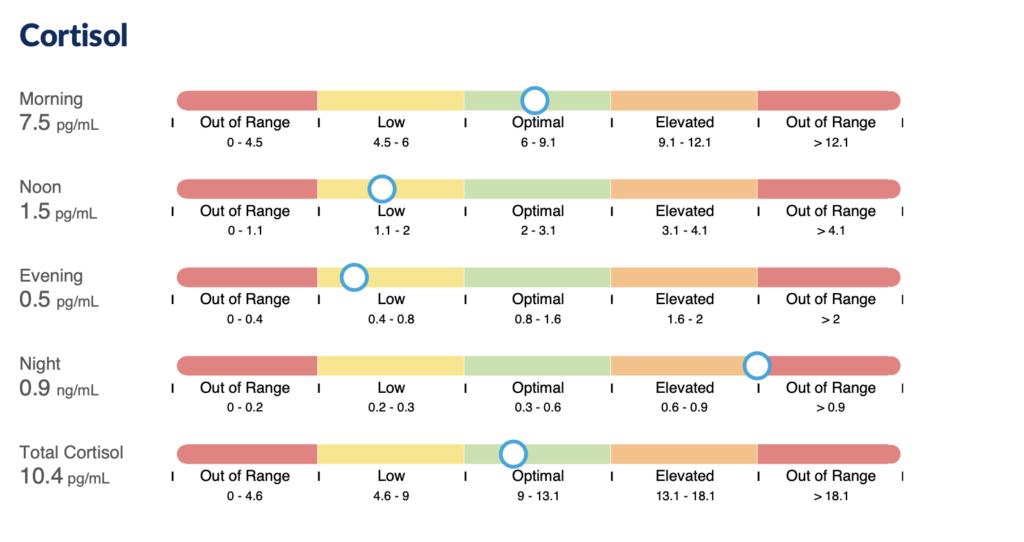
cortisol patternRead more

Hormonal SOS: lifestyle tweaks for women in their 30s

Web Admin 0 1442 Article rating: No rating

Sharing some liestyle tweaks for my friends in their 30s. 

Hi friends! How are you? I hope that you had a wonderful weekend and that my friends who were celebrating enjoyed a happy Easter. This week, the kids head back in school, and I’m back to the routine after a fun trip to California and a festive weekend with family.

For today’s post, I wanted to chat a bit about hormone changes and simple lifestyle tweaks we can make for our hormones. I’m writing this for my friends who are in their 30s (let me know if you’d like me to do one for 40s! I’m going to be 40 this year so I’ll be there soon myself), and as always, I’m here if you have questions or if I can support you in any way.

As women transition through their 30s, hormonal fluctuations become more pronounced, impacting various aspects of health and well-being. From mood swings to disrupted sleep and fluctuating energy levels, dealing with these hormonal shifts can feel like an uphill battle. However, with strategic lifestyle adjustments, it’s possible to support hormonal balance and thrive during this transformative decade.

Here are some of my tips for women in their 30s! As always, talk with a doctor before making any fitness or nutrition changes.

Hormonal SOS: likestyle tweaks for women in their 30s

Prioritize Sleep Hygiene:

Quality sleep is paramount for hormonal health, yet it often takes a backseat in our busy lives. Establishing a consistent sleep schedule, creating a calming bedtime routine, and optimizing sleep environment can promote restorative sleep and hormonal balance. Consider incorporating relaxing activities such as reading a book, taking a warm bath with Epsom salts, relaxing in the sauna blanket, or practicing gentle yoga stretches before bed to unwind and signal to your body that it’s time to wind down.

Mindful Movement:

Regular exercise is vital for overall health, but excessive or intense workouts can stress the body and disrupt hormonal equilibrium. Embrace mindful movement practices like yoga, Pilates, or walking to support adrenal health and mitigate stress-induced hormonal imbalances.

Instead of high-intensity interval training (HIIT) sessions every day, intersperse your routine with gentle, rejuvenating activities like nature walks, restorative yoga, or leisurely bike rides. A good rule of thumb: if you did it yesterday (and it was intense), don’t do it again today. Try to alternate intensities in your weekly routine.

Balanced Nutrition:

Fuel your body with nutrient-dense foods rich in vitamins, minerals, and antioxidants to support hormonal health. Prioritize whole foods, fiber-rich vegetables, lean proteins, and healthy fats while minimizing processed foods, refined sugars, and excessive caffeine intake. Incorporate hormone-balancing foods such as leafy greens, fatty fish, nuts and seeds, and fermented foods li

RSS